

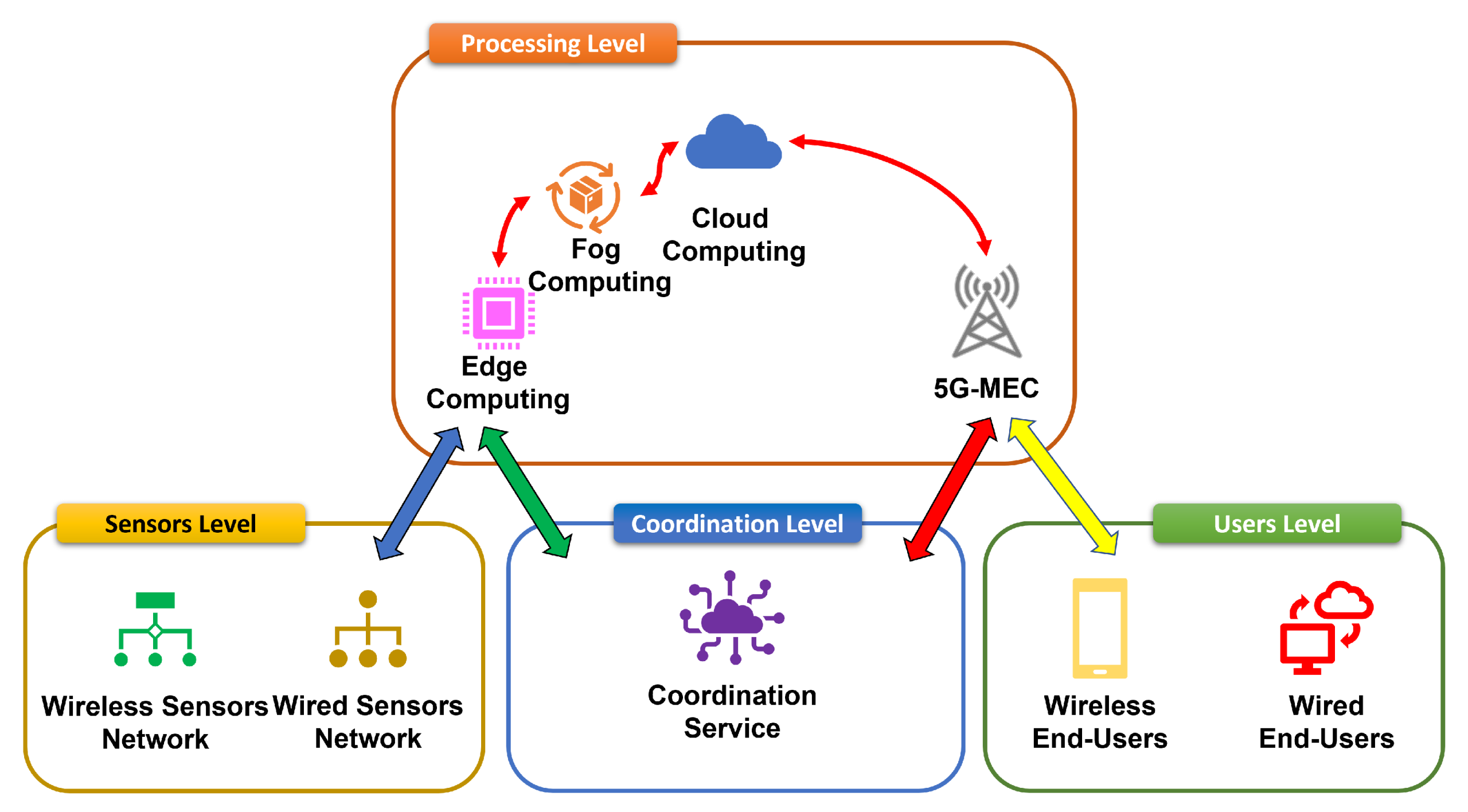
Picture this: a factory robot arm needs to stop before it crushes a worker’s hand. The camera sees the hand, the model processes the frame, and the arm halts. If that whole loop takes 300 milliseconds, well… that’s too late. That’s the world of latency-sensitive applications, and it’s exactly why edge AI deployment has gone from a nice-to-have to a genuine engineering necessity.
For years, we shipped data off to the cloud, let a beefy GPU cluster chew on it, and waited for an answer to come back. Honestly, that worked fine for a lot of use cases. But when milliseconds decide whether a system works or fails, the round trip to a distant data center becomes the enemy.
What “Latency-Sensitive” Actually Means
Not every application cares about speed. A nightly analytics job can take its sweet time. But some systems live or die by response time. We’re talking about:
- Autonomous vehicles — pedestrian detection can’t wait on a cell tower
- Industrial safety systems — emergency stops measured in single-digit milliseconds
- Augmented reality — motion-to-photon latency above ~20ms makes users nauseous
- Real-time fraud detection — the transaction clears before the cloud even answers
- Surgical robotics — a surgeon’s hand movement must feel instantaneous
In each case, the network itself becomes the bottleneck. And networks, as we all know, are wonderfully unpredictable. Congestion, routing hiccups, a backhoe cutting a fiber line — any of it can turn a 40ms response into a 400ms one.
Why the Cloud Alone Can’t Cut It
Here’s the deal. Cloud inference is powerful, scalable, and convenient. But physics doesn’t negotiate. Data traveling to a data center and back covers real distance, and light in fiber moves at roughly two-thirds the speed of light. Add in queuing, load balancing, TLS handshakes, and suddenly your “fast” cloud endpoint is adding 50–200ms of pure overhead.
Then there’s the reliability angle. A factory running a vision inspection line can’t afford to go dark because the ISP had a bad afternoon. Edge AI keeps the intelligence local, so the system keeps working even when the internet doesn’t.
And let’s not forget privacy and bandwidth. Sending raw 4K video streams from 200 cameras to the cloud is expensive — and sometimes legally messy. Processing on-device sidesteps a lot of that.
The Hardware Landscape: Small but Mighty
Edge AI hardware has come a long way. You no longer need a rack of servers to run a decent model. Today’s options range from tiny microcontrollers to compact inference accelerators.
| Hardware Type | Typical Use Case | Latency Range |
|---|---|---|
| NPU-equipped SoCs | Smart cameras, drones | 5–30 ms |
| Edge GPUs (Jetson-class) | Robotics, medical imaging | 10–50 ms |
| FPGA accelerators | Industrial control, radar | 1–10 ms |
| TPU edge modules | Retail analytics, kiosks | 15–40 ms |
| Microcontrollers with TinyML | Wearables, sensors | <5 ms |
The key insight? You match the silicon to the task. A keyword-spotting model on a hearing aid doesn’t need a GPU. A multi-camera fusion system on a delivery robot probably does.
Optimizing Models for the Edge
Deploying a model trained for a data center GPU straight onto an edge device is a recipe for disappointment. Those models are often bloated, over-parameterized, and hungry for memory bandwidth that simply isn’t there.
So what do you do? You compress, prune, and quantize. In plain terms:
- Pruning — remove weights that barely contribute to output
- Quantization — convert 32-bit floats to 8-bit integers (or even lower), shrinking size and speeding inference
- Knowledge distillation — train a small “student” model to mimic a large “teacher”
- Architecture search — design networks specifically for edge constraints from the start
A well-quantized model can run 3–4x faster with minimal accuracy loss. That’s often the difference between a demo and a shipped product.
Real-World Deployment Patterns
There’s no single blueprint for edge AI. But a few patterns keep showing up.
Fully On-Device Inference
Everything runs locally. No network dependency at all. This is the gold standard for latency — think sub-10ms — and it’s what you see in safety-critical systems. The tradeoff? Limited compute, harder updates, and you’re stuck with whatever model fits.
Edge Server with Local Aggregation
Multiple devices feed into a nearby edge server — often sitting in the same building or on the same factory floor. Latency stays in the low tens of milliseconds, and you get more compute headroom for bigger models. This is a sweet spot for retail, smart buildings, and many industrial setups.
Hybrid Cloud-Edge Split
Fast decisions happen at the edge; heavier analytics and model retraining happen in the cloud. You get the best of both — low latency where it matters, scalable learning where it’s cheap. The trick is drawing the line in the right place.
The Challenges Nobody Talks About Enough
Sure, edge AI sounds great on a slide. But deployment is messy. Here’s what actually trips teams up:
- Model drift — the world changes, and your frozen edge model slowly gets worse
- Fleet management — updating 5,000 devices in the field is not like pushing to a server
- Thermal limits — edge boxes get hot, and throttling kills latency guarantees
- Security — physical access means the device can be tampered with
- Observability — how do you debug something you can’t SSH into?
Honestly, the tooling here is still maturing. MLOps for the edge is a few years behind its cloud counterpart. But it’s catching up fast.
Where This Is Heading
We’re seeing a few trends converge. First, edge chips are getting dramatically better — the newest NPUs rival last-generation discrete GPUs. Second, model compression research keeps pushing the boundary of what fits on tiny hardware. And third, frameworks like ONNX Runtime, TensorRT, and TFLite Micro are making deployment less of a bespoke nightmare.
There’s also growing interest in federated learning — training across edge devices without ever centralizing raw data. It’s early, but for privacy-sensitive industries like healthcare, it’s a big deal.
The bottom line? Latency isn’t a nice-to-have anymore. It’s a design constraint. And edge AI is how you meet it — not by fighting physics, but by working with it. The intelligence moves closer to the moment that matters. And honestly, that’s where it probably should have been all along.